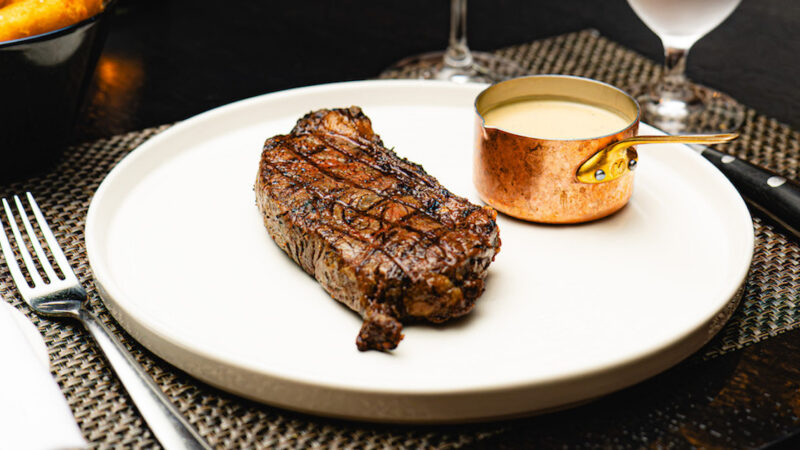
How To Cook Tomahawk Steak Like A Pro
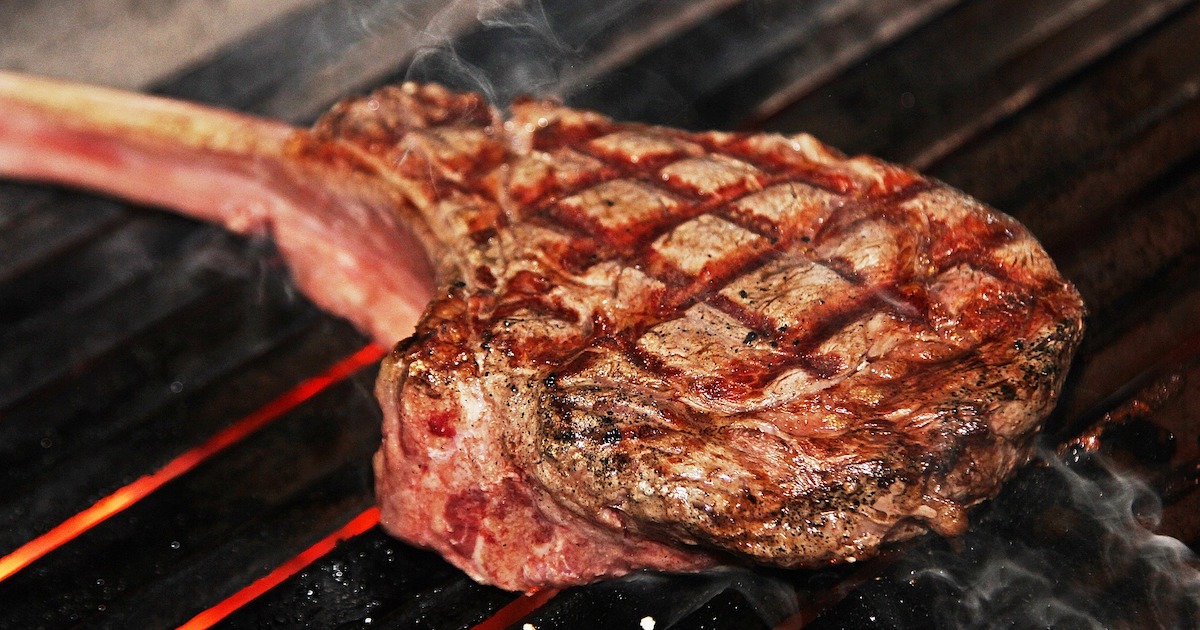
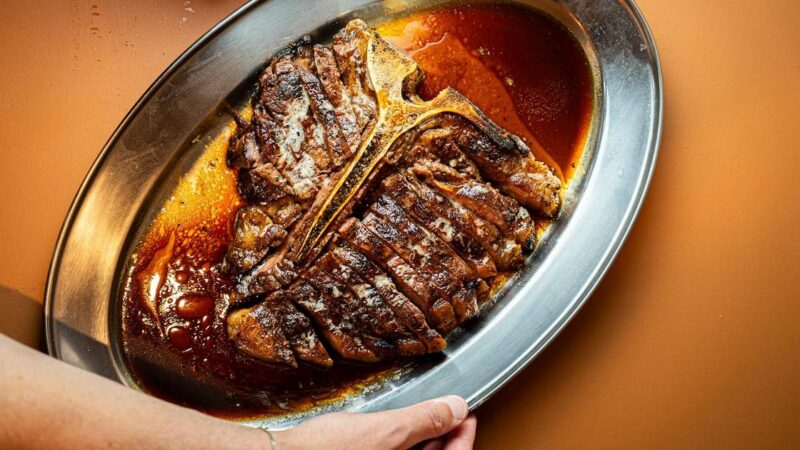
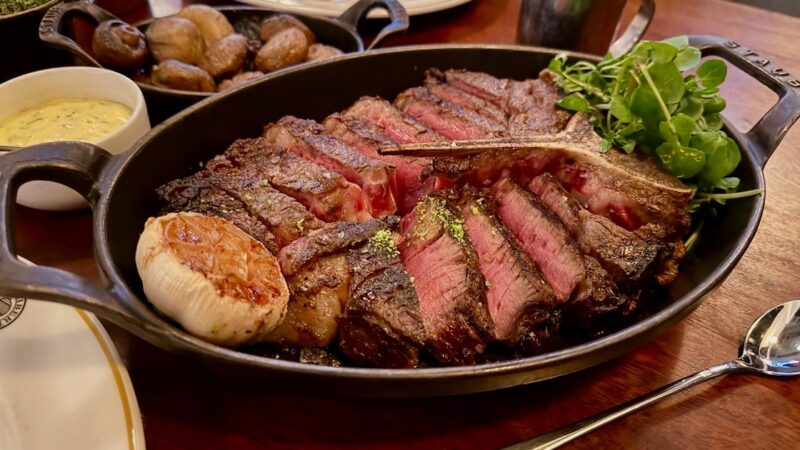
A tomahawk steak is a real showstopper of a piece of beef. Essentially a bone-in ribeye with the long rib bone left in for extra visual appeal, it’s got that “Flintstones” vibe, and is perfect for summer barbecues. But as a large and particularly thick cut, with a huge bone attached, it can be an intimidating steak for home cooks to tackle. So I asked Brayden Davies, head chef at Michelin Guide listed The Box Tree in Ilkley, Yorkshire, to share his expert tips.
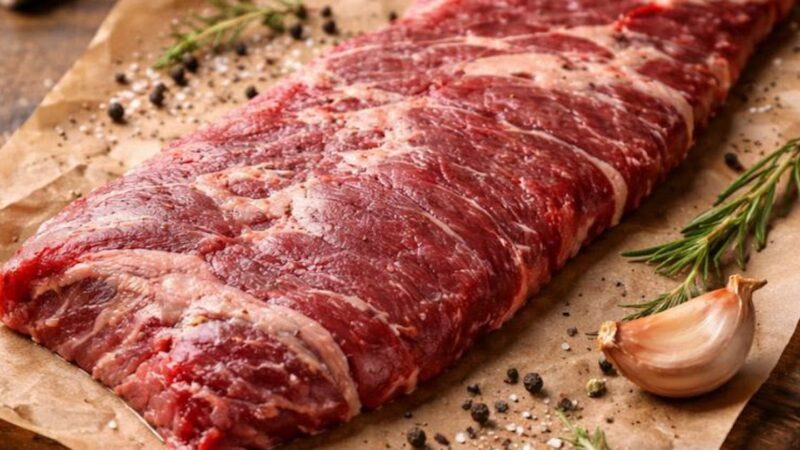
“When buying any cut of beef, I’m always looking for decent marbling and a lovely aged, dark red colour,” says Davies. “Don’t be drawn in by bright red meat, which is often associated with freshness. Properly aged beef develops a deeper colour and far more flavour.” The chef’s preferred tomahawk weighs between 800g and 1.2kg, he says, although it’s worth remembering that the bone can account for around 20% of the overall weight. “If you want the same cut with a shorter bone, look for a côte de boeuf, sometimes referred to as an OP rib,” he suggests. “Personally, I always opt for a Westholme Australian Wagyu tomahawk. The higher marbling content caramelises beautifully over the barbecue and delivers exceptional flavour.”
Davies takes his tomahawk out of the fridge 30 to 40 minutes before cooking to allow it to come closer to room temperature, which helps the mammoth cut cook more evenly. He seasons the beef simply with sea salt and cracked black pepper to allow the flavour of the meat to take centre stage — but this is not the time to skimp. “One thing people often forget is that during searing you’ll lose some of that seasoning, so don’t be afraid to be quite liberal with it from the outset,” he explains. “Overcompensate.”
Use a reverse sear method to cook a tomahawk steak
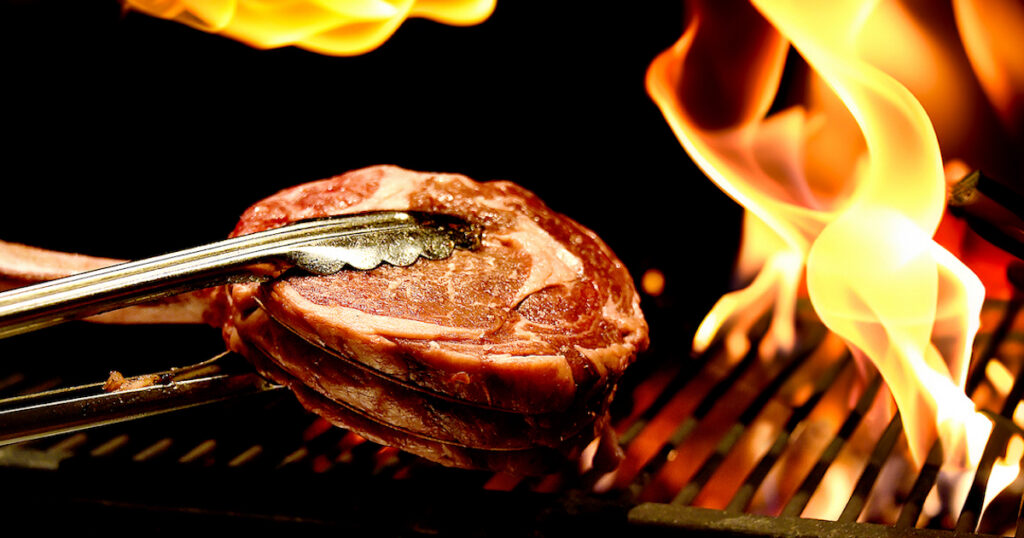
It’s not a cheap cut if you mess things up, so how do you actually cook a huge bone-in tomahawk for the best results? “Over the years of specialising in meat and protein cookery, I’ve developed a method inspired by the reverse sear technique that delivers fantastic results every time,” says chef Brayden Davies. “Start by getting your barbecue extremely hot. Wrap the bone in foil to stop it turning black, then sear the tomahawk on all sides until you achieve a deep, caramelised crust.”
Next, place your meat on a wire rack set over a tray — and at the same time, melt some butter in a pan and add a handful of thyme, rosemary and a couple of cloves of garlic. “Allow the butter to brown gently then pour it over the meat (you will hear the herbs pop),” says Davies. “Transfer the tomahawk to an oven preheated to 90°C (yep, cook it low and slow) for 60 to 80 minutes, or until the internal temperature reaches around 52°C using a meat probe.”
Finally, you’ll want to return the steak to the barbecue for a quick second sear to get the juices flowing. “This helps develop even more flavour and brings the internal temperature up to around 55 to 57°C, which is my preferred level of doneness for a cut like this,” says Davies. “There’s no need to rest as the cooking process has been so long that the resting has already happened without you knowing.”
Slice tomahawk steak before serving for the best presentation
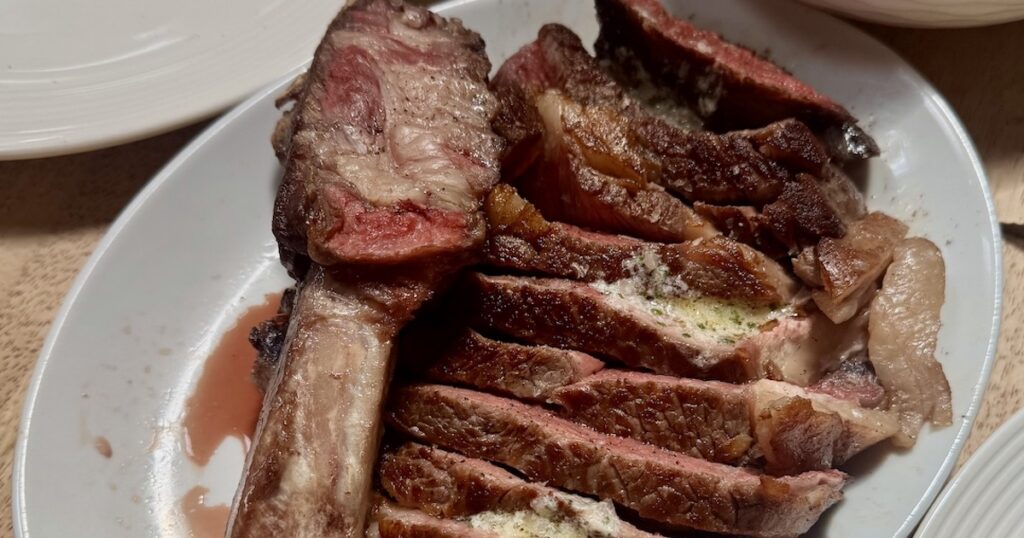
Once you’ve gone to all the effort of expertly cooking a tomahawk, you’ll want to slice the steak the right way before serving. “I like to remove the meat from the bone, slice it into roughly 2cm thick slices and arrange it on a wooden board, serving the bone alongside for presentation,” says chef Brayden Davies. “It’s a real showstopper at a dinner party.”
The chef recommends finishing the steak with a sprinkle of sea salt flakes, and serving it with simple barbecue sides that complement the beef rather than overpowering it. “Barbecued lemon halves, vine-roasted cherry tomatoes and duck fat potatoes work brilliantly,” he says.
As for sauces, you don’t need to serve anything overly rich for a robustly beefy rib cut like a tomahawk. Instead, opt for something that contrasts with the savoury meat and adds welcome brightness. “I like something fresh and vibrant such as a salsa verde or chimichurri,” says Davies.
Brayden Davies is an Aussie Beef Mate for Aussie Beef & Lamb, helping to promote the awareness of Australian beef in the UK.