What Is A Porterhouse Steak And How Is It Different From A T-Bone?
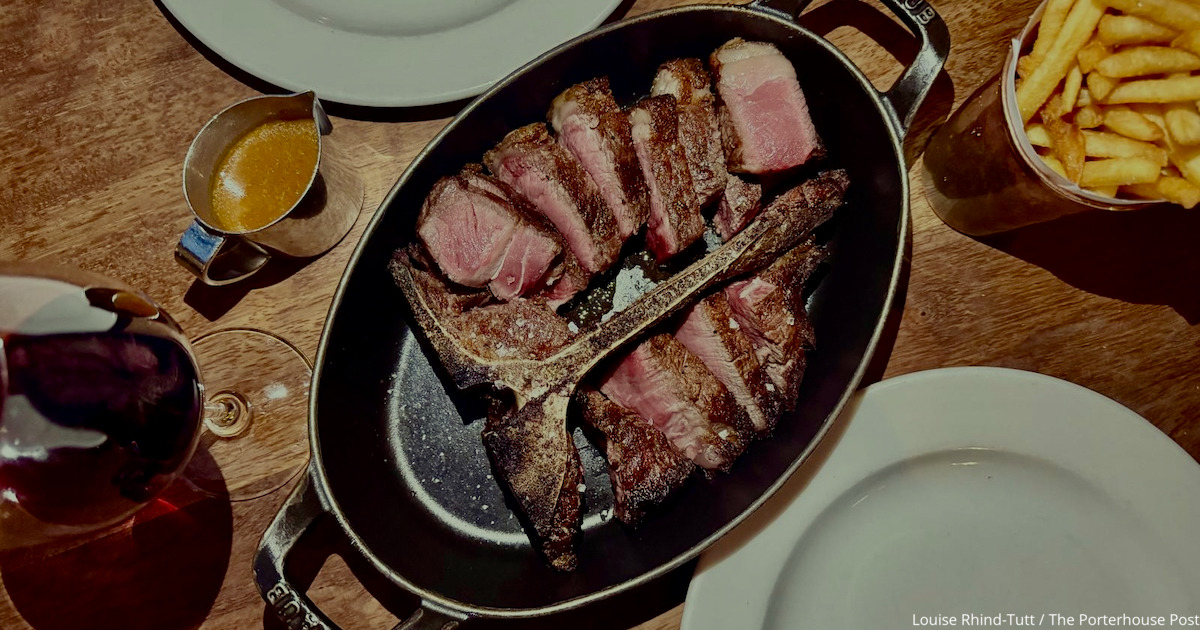
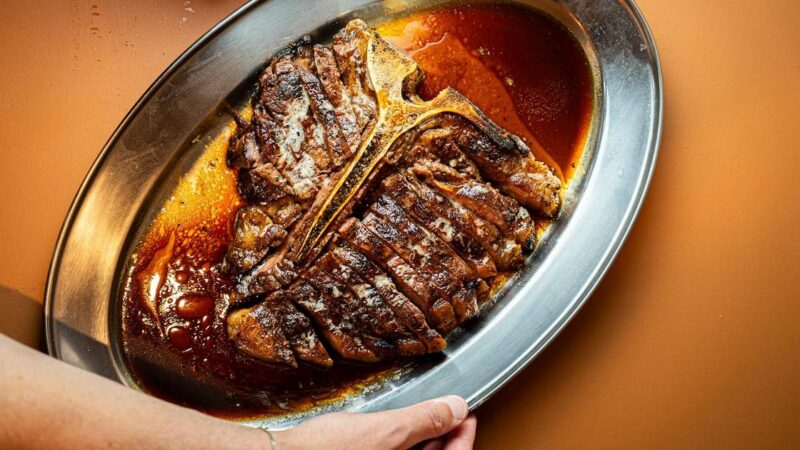
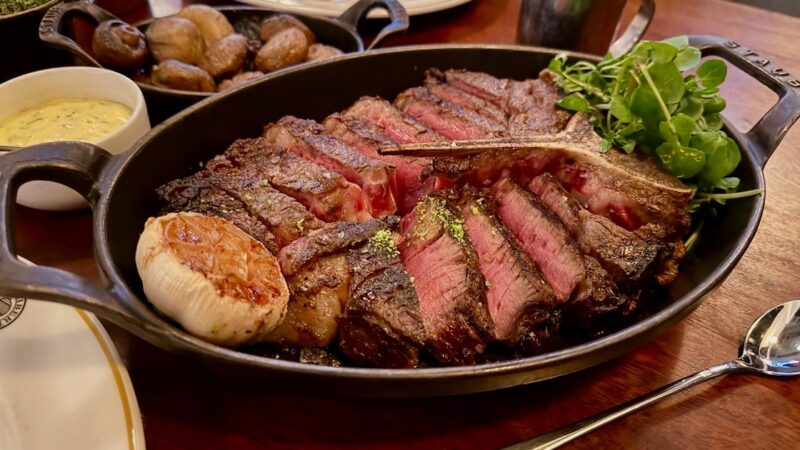
The very fact that I named this website The Porterhouse Post demonstrates how highly I think of this particular cut of steak. But what exactly is it, and why is it something worth ordering? Essentially, the porterhouse is two steaks in one – a sirloin on one side and a fillet on the other, separated by a T-shaped bone. Also known as a composite steak, it’s a large cut that’s ideal for sharing.
This porterhouse cut comes from the primal section of the short loin section. Because it encompasses both a buttery-tender fillet and a richly-flavored sirloin, you really do get the best of both worlds, making this bone-in steak a real treat, whether you’re cooking it yourself or ordering it in a steakhouse. Either way, opt for medium-rare to keep the meat juicy and avoid overcooking the fillet, and serve it sliced.
With its two primal cuts divided by a T-shaped bone, you may be thinking that the porterhouse sounds pretty similar to a regular T-bone. But while there are many similarities, they’re not the same cut. The main difference between the porterhouse steak and the T-bone is to do with size – particularly of the fillet part.
The porterhouse has more fillet than the T-bone

In the U.S., there are clear rules as defined by the United States Department of Agriculture. The width of the tenderloin (fillet) section must measure at least 1.25 inches (3.2 centimetres) across from the bone to the edge on a porterhouse, according to the USDA. For a T-bone, it needs to measure just half an inch (13 millimetres) across. What this means is that all porterhouse steaks are T-bones, but not all T-bones are porterhouses. But when your fillet section measures 1.25 inches across or more, the steak officially becomes a porterhouse rather than a T-bone.
While America is clear on the distinction, we tend to be less precise in the United Kingdom. “We do not have a clear set of rules in the UK as to the specific cuts, it’s usually a rule of thumb,” Marcus Littlewood of Littlewoods Butchers in Heaton Chapel, Stockport told me. “We have always used the USDA rules as a guideline.” For premium steak restaurant chain Hawksmoor, it’s about ratio: The porterhouse has a 30% fillet and 70% sirloin, whereas a T-bone is “basically a sirloin on the bone” (per Instagram).
The reason for the size difference is because of where it comes from on the animal. The T-bone is from the smaller front end of the loin section, whereas the porterhouse comes from the rear end of it. The latter is often cut thicker, too, to make it even more of a treat to share – it can easily weigh around 24 ounces. Essentially, if you’re a fan of the T-bone steak, you’ll love its bigger, beefier cousin: the porterhouse.